Integrated Shield Plan (IP) – What Should I Do If My Premiums Keep Going Up?
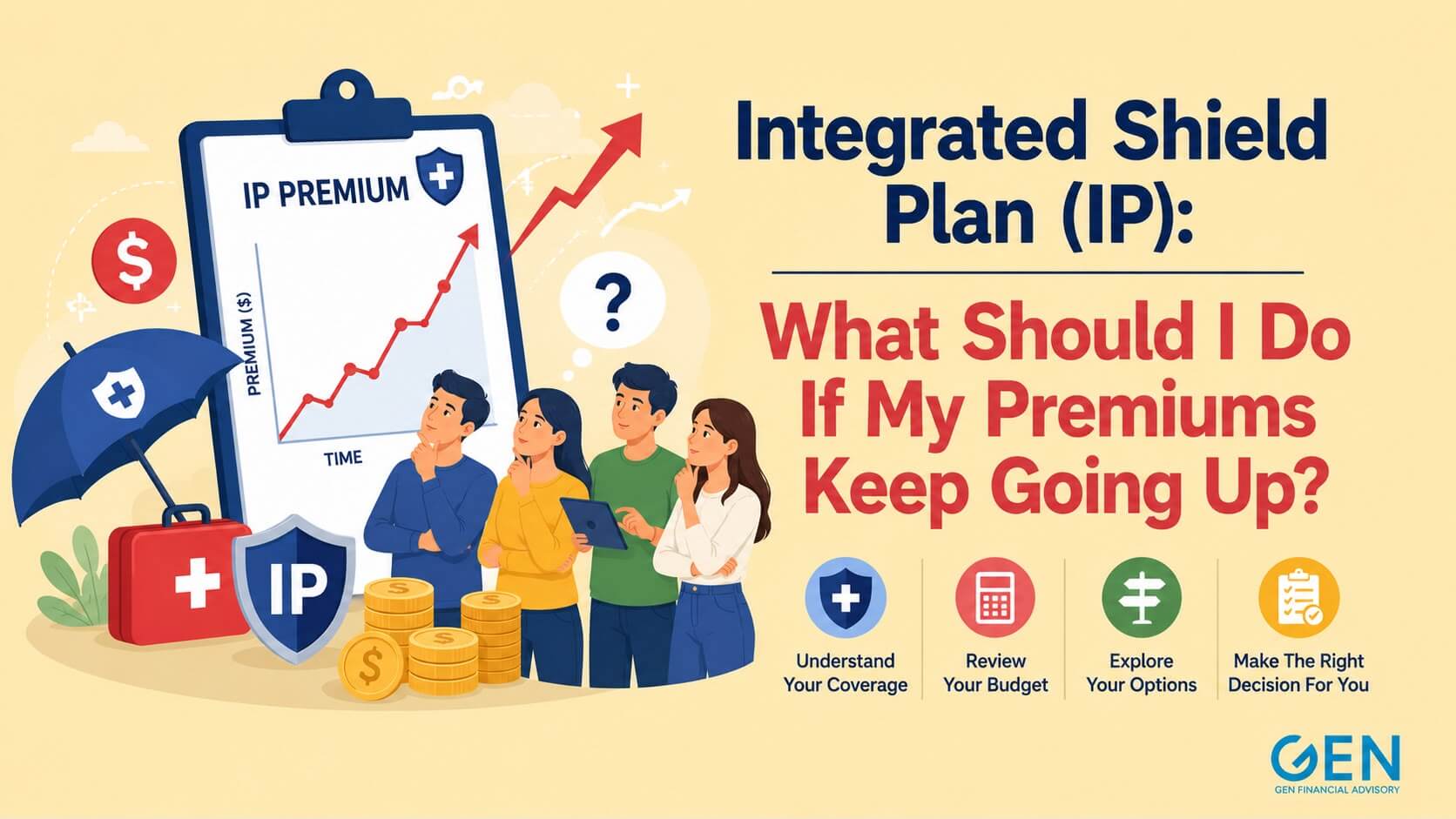
“When will the IP premiums come down or at least, stabilise and stop increasing?”
It is a common question, a fair one and a hopeful one.
Unfortunately, I think we may now be asking the wrong question.
Healthcare costs are rising much faster than general inflation. The latest WTW Global Medical Trends Survey projects insured medical costs in Singapore to increase by 16.9% in 2026, after increasing 15.5% in 2025. Whether the eventual number is slightly higher or lower is almost beside the point. The long-term direction is clear — healthcare costs are likely to continue rising for many years to come.
If medical insurance premiums is to fund medical insurance coverage which in turns pays for medical costs in Singapore, the logical and reasonable conclusion will be that unless medical costs reverse and starts trending sideways or downwards, IP premiums will have to increase in tandem.
If the expectation of permanent increasing IP premiums becomes a reality, how should we rethink the whole IP premiums and medical coverage issue that affects all of us, our family and our finances?
Medical Insurance 101
When it comes to financial planning, the objective of medical insurance is to remove the uncertainty of medical costs and the purpose is to provide peace of mind. We do not buy medical insurance because the premiums are cheap or affordable. We buy medical insurance because it can do something we can’t or don’t want to do by ourselves – set aside a large sum of money waiting for a medical liquidity event that may or may not happen.
If this premise is true, then the goal of medical insurance like our IP should be judged on the uncertainty it removes, the peace of mind it provides and the financial protection we receive.
Yet, we naturally tend to evaluate our IPs based on today’s premium. Some may conclude that private hospitals are unnecessary. Others feel MediShield Life should be sufficient. Many simply focus on whether premiums have become “too expensive”.
These are understandable reactions, but I do not think they are the right starting point. At least not now and not moving forward.
The objective of healthcare planning should not be to keep premiums low. The objective should be to ensure that our healthcare protection and by extension, our peace of mind remains sustainable throughout retirement.
And, those are two very different things.
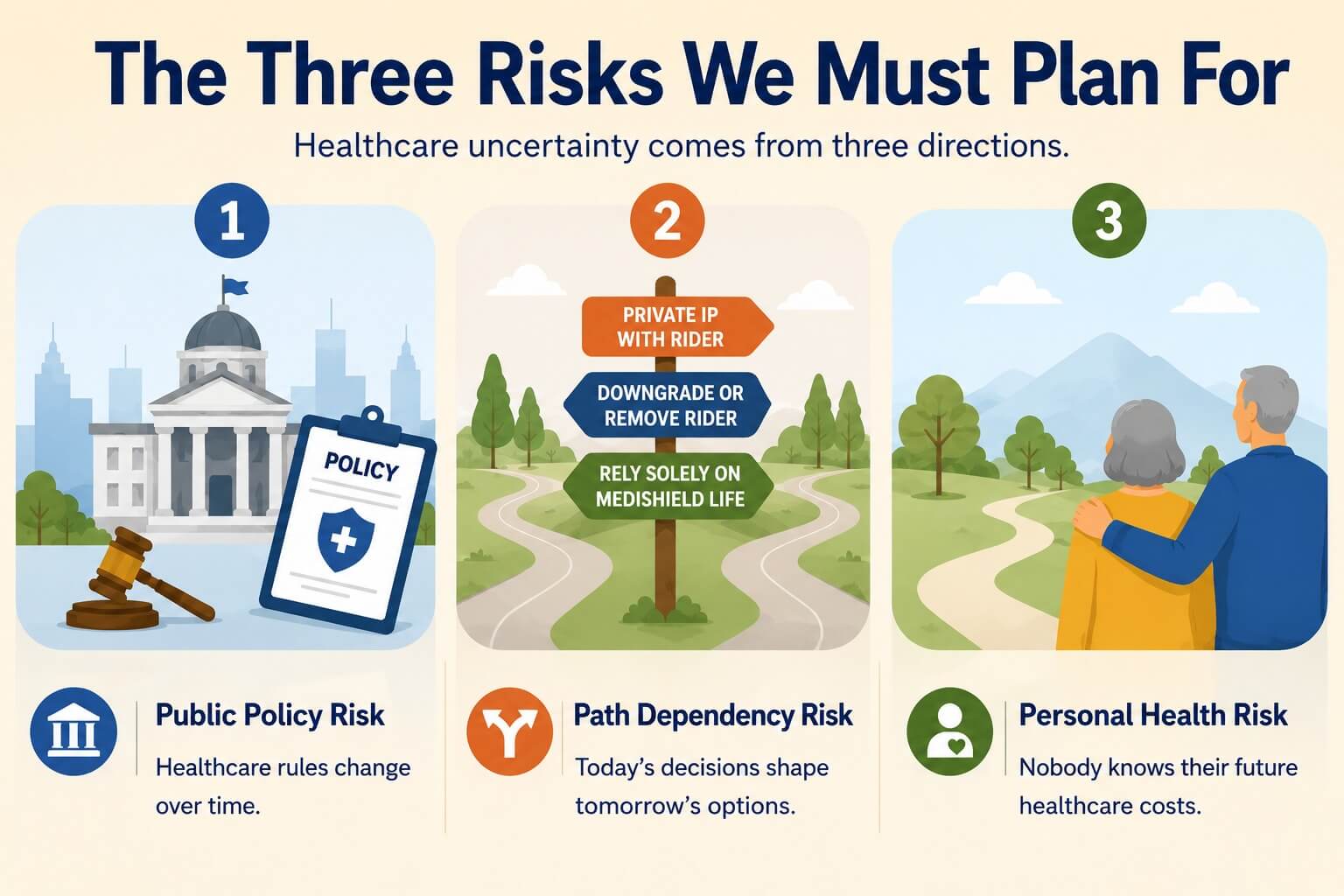
In my opinion, to plan with the goal of removing financial uncertainty and achieving a peace of mind for the long term, we have to acknowledge the new risks and understand how to plan for them.

Sometimes, Not Downgrading May Be The Right Thing To Do
According to the Ministry of Health, Singapore’s public hospitals provide about 80% of the nation’s hospital beds, yet they are currently treating around 90% of all hospital patients. One reason is that many policyholders eventually downgrade or give up private hospital coverage because premiums become increasingly difficult to maintain.
This is precisely why recent policy changes have focused on slowing the growth of healthcare costs and IP premiums—not because premiums can be frozen, but because they need to remain sustainable.
In a way, healthcare is much like our transport system. The system does not work if everyone takes public transport (even if it’s the most cost effective and environmentally friendly option) nor can the system work if everyone owns their own car (even if affordability is not an issue). If everyone insists on driving, roads become congested. If everyone relies solely on public transport, trains and buses become overcrowded.
For those who can comfortably afford private healthcare, remaining in the private system does not simply benefit themselves. It also helps reduce demand on an already heavily utilised public healthcare system.
This is why I would encourage retirees not to over-downgrade simply because premiums have become uncomfortable. The objective is not to pay the lowest premium possible. The objective is to minimise your out-of-pocket costs on a premium commitment that you can afford.
New Questions. Same Objective.
Climate change has changed the questions we ask.
We no longer ask when temperatures will go back to normal. We ask how to live in a warmer world.
Perhaps it is time we do the same for healthcare planning. Instead of asking when IP premiums will stabilise, we should ask how to maintain the maximum healthcare protection we can sustainably afford throughout retirement.
Because the objective has never been low premiums.
The objective has always been peace of mind.
Article by Lee Meng Choe
Email: mengchoe.lee@gen.com.sg
The writer is the Executive Director (Advisory) of GEN Financial Advisory