Financial Wellness for Women: 5 Ways to Find Balance Between Today and Tomorrow
Over the years, I have spoken to many women who are trying to balance different parts of their lives at the same time, work, children, ageing parents, relationships, health and their own personal goals. Very often, our own financial future is somewhere in the middle of all these responsibilities.
At certain stages, our children may need more of our time and resources. At another stage, it may be our parents. There may be periods when our careers take priority and others when our health or family needs more attention. This is why I believe financial planning for women is really about finding balance. Not a perfect balance where everything receives equal attention all the time but a practical balance that changes as life changes.
Our financial priorities will shift too. What matters most in our 30s may be very different from what matters in our 40s, 50s or as we approach retirement. We want to enjoy life today but we also need to prepare for tomorrow. We want to provide for our children but we cannot forget our own retirement. We want our money to grow but we also need enough protection and emergency savings for the unexpected. The important thing is to understand what needs our attention at each stage, without losing sight of our own financial wellbeing.
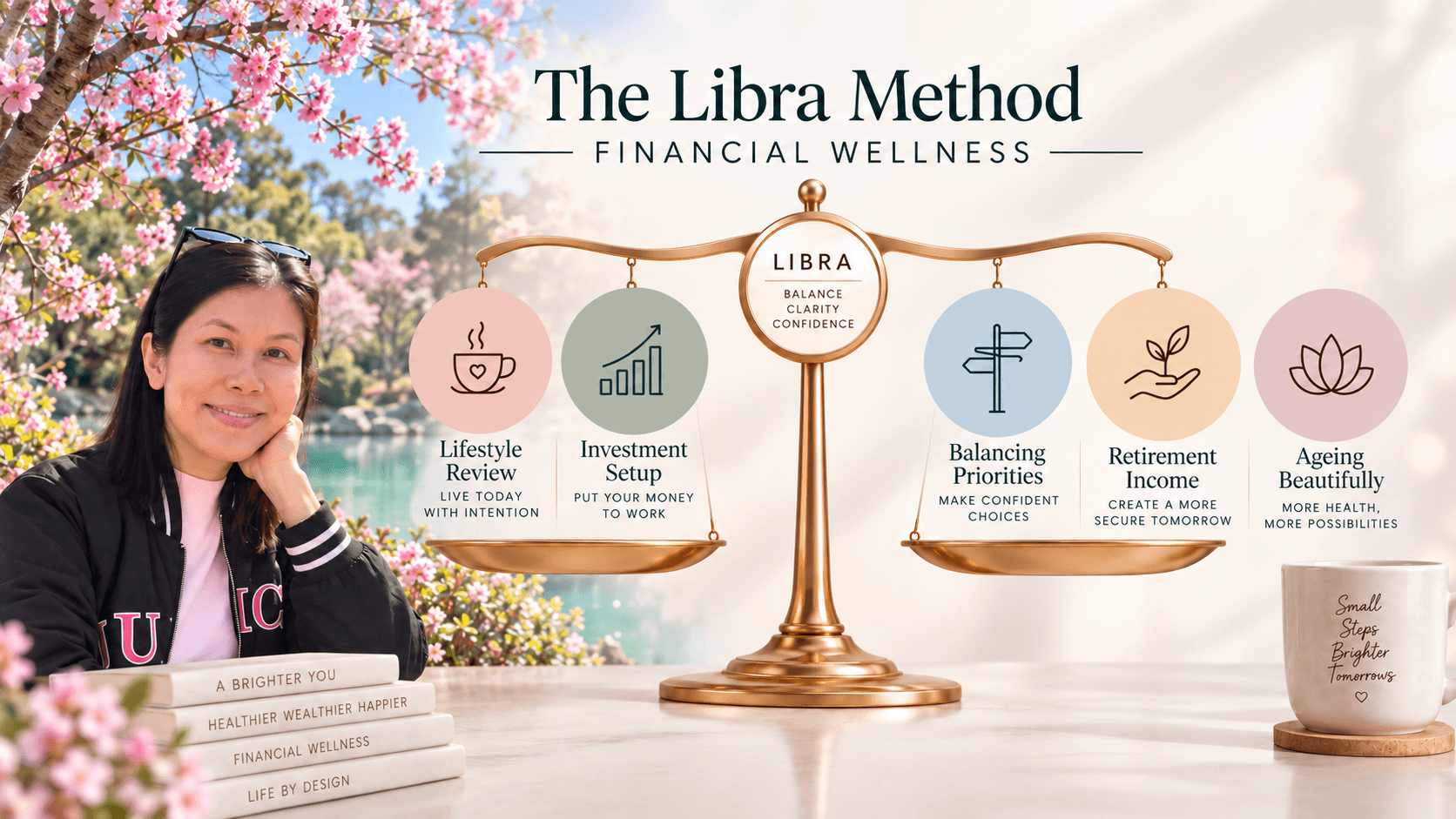
Years ago, this was what inspired me to create my Libra Method for retirement planning for women: Lifestyle review, Investment setup, Balancing priorities, Retirement income and Ageing beautifully. At that time, I was thinking mainly about retirement planning
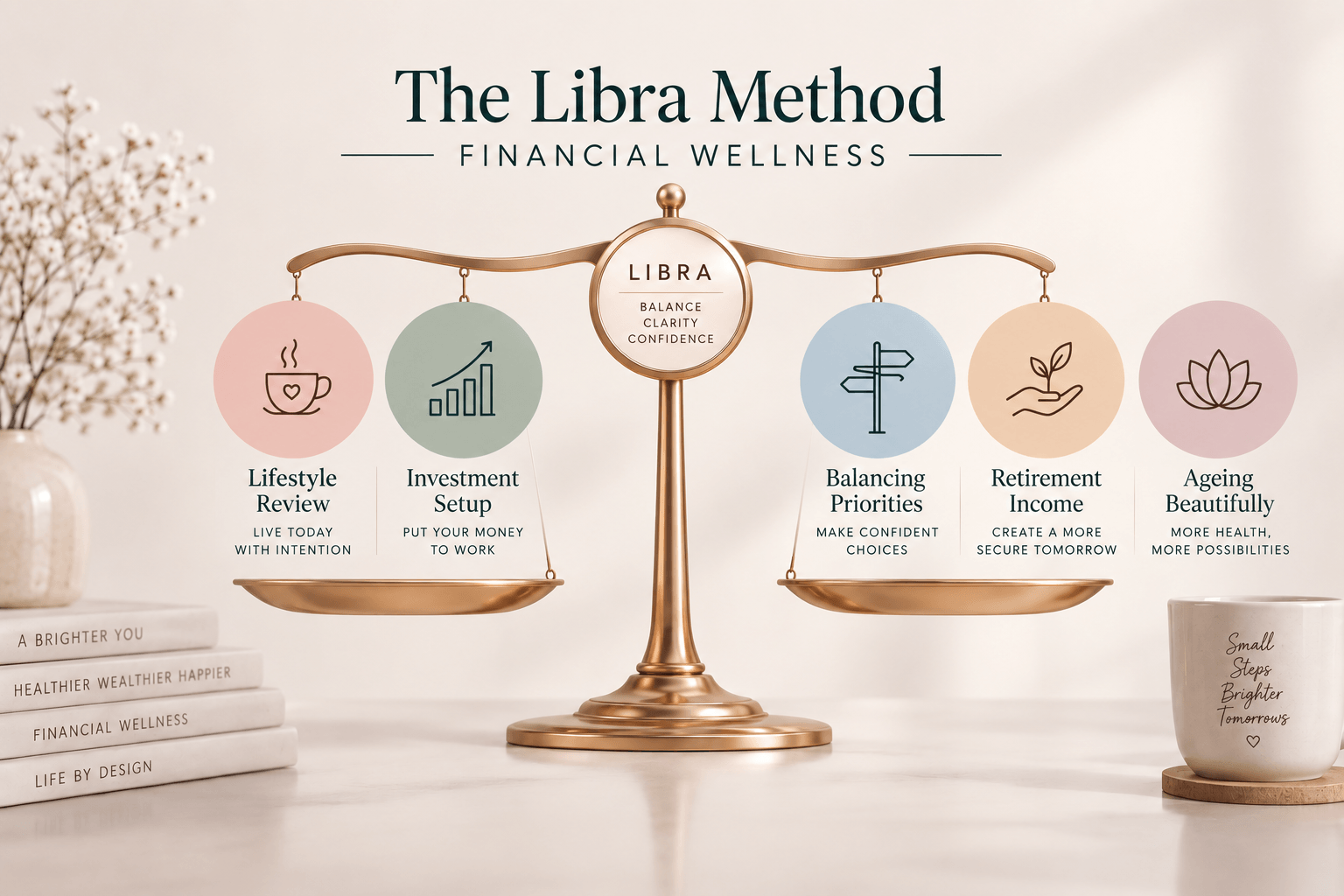
Looking back today, after many more years of working with women and going through different stages of life myself, I realise that what I was really trying to describe was something broader.
It was financial wellness.
Being a Libra, I have always liked the idea of balance. But over the years, I have come to see balance differently. To me, balance does not mean having everything perfectly planned or giving equal attention to every part of life all the time. It means knowing what needs your attention at this stage of your life. And that is also how I now think about financial wellness.
Financial wellness is not about having everything perfectly planned. It is about understanding your finances, preparing for your needs and having greater confidence in your decisions. It is about finding a better balance between living well today and preparing well for tomorrow.
That is why, even after all these years, I still like the thinking behind my original Libra Method. The five areas remain relevant. But today, I would look at them through a wider lens, not simply as five steps towards retirement but as five ways women can build greater financial wellness throughout life.
1. L — Lifestyle Review: Start With the Life You Want
Financial planning often begins with numbers. How much do you earn? How much have you saved? What is your CPF balance? How much are your investments worth? These are important questions but I believe there is another question we should ask first:
What kind of life are you planning for?
I remember a conversation with a client who was very disciplined about saving for her future. She told me that even when her family went out for a simple meal, she would consciously limit what they ordered. If they were having rice, they would order only two dishes instead of three because she felt that she needed to budget and save more for the future. Over time, this became more than just being careful with money. She became frustrated and confused. She knew she needed to save but she was no longer sure how much was enough. Every spending decision started to feel like a trade-off between enjoying life today and protecting her future.
That conversation stayed with me.
There is certainly nothing wrong with being careful with money. In fact, having the discipline to save is important. But if financial planning reaches a point where we are constantly second-guessing every small expense, feeling guilty when we spend or becoming frustrated because we do not know whether we are doing enough, then something is missing.
Financial wellness should give us greater clarity, not greater anxiety. It should help us understand what we need to save for the future while also giving us confidence that it is okay to enjoy some of our money today. Sometimes, the issue is not that we are spending too much. It is that we do not yet have a clear enough plan to know what we can comfortably spend.
This is why I believe financial planning should begin with the life we want our money to support. From the women clients I have worked with over the years, I have seen how different retirement can look from one person to another. Some women hope to travel more and finally have time for the holidays they have been putting off. Some want to spend more time with their children and grandchildren. Some still enjoy working and may prefer to continue but at a slower pace. Others simply want the comfort of knowing that their monthly expenses are taken care of without having to worry about money all the time.
There is no one definition of a good retirement. That is why I like to start by understanding the lifestyle a woman hopes to have rather than jumping straight into a retirement number. From there, we can work backwards to understand how much she needs to save, what kind of retirement income may be needed and how her existing resources can support that lifestyle. But I also believe we should not plan so much for the future that we forget to live today. Some of the women I meet are very disciplined savers. They are careful, responsible and always thinking ahead. But sometimes, that can also come with guilt around spending, even when they can afford to enjoy a little more.
Financial wellness should help reduce that uncertainty. A good financial plan should give us greater clarity about what we need for the future while also giving us confidence to enjoy some of our money today. Life today matters too. The goal is not to sacrifice today for tomorrow. It is to find a better balance between enjoying life now and preparing well for the years ahead. Our needs will also change as we move through life. I wrote more about this in Retirement Planning for Women: How Should Women Plan at 3 Different Life Stages?.
2. I — Investment Setup: Build Your Own Financial Independence
Over the years, I have met many women who understand that investing is important but still hesitate to start. It is rarely because they do not care about their financial future. Some simply do not know where to begin. Some worry about losing money. Some may want to invest but are unsure where to begin because everything sounds so technical. Others are simply too busy managing work and family responsibilities to spend hours studying markets and investments.
I explored some of these challenges in Financial Planning for Women: Why Are Women Being Left Behind When It Comes to Investing? The Common 7 Challenges. I still believe women should be involved in their own investment decisions. That does not mean we need to know everything about investing or follow the markets every day. Instead, we should have a clear understanding of what we own, why it is there and how it fits into the bigger picture of our financial plan.
Before investing, I like to first understand what the financial goals are and when the money may be needed. Some may be for your children’s education, some for a future home and some for retirement much further down the road. The goal and time horizon will influence how that money should be invested. And as we move closer to retirement, the investment conversation changes too. It becomes less about simply aiming for the highest possible return and more about getting the right balance between growth, diversification, income, liquidity and the level of market fluctuations we are comfortable with. Investing is ultimately about more than returns. It is about building financial independence and having choices.
3. B — Balancing Priorities: You Belong in the Financial Plan Too
The more women I work with, the more important this part of the Libra Method feels to me.
Women wear many hats. We may be daughters, wives, mothers, employees, business owners and caregivers, sometimes several of these at the same time. Very often, when someone in the family needs something, we give. We pay for our children’s education. We help our parents. We support our spouse. We take time away from work when somebody needs care.
In my work with women, I have also seen what I call “over-giving risk”. Giving is part of caring. But there can come a point when continuously putting everyone else’s financial needs ahead of our own starts to compromise our own financial security. I have seen women approaching retirement who are still financially supporting adult children. Others have interrupted their careers for caregiving and lost several important years of income, CPF contributions and investment growth.
During those years, a woman who would normally be accumulating wealth may temporarily become a wealth decumulator instead. That is why financial planning for women cannot simply assume that income and savings will increase steadily every year. Women can face different financial risks at different stages of life. There may be maternity leave, career breaks, caregiving responsibilities, divorce, health changes or ageing parents who need more support. These changes can affect income, savings, CPF contributions and how much we are able to set aside for the future. Financial planning needs to take these realities into account rather than assume that our financial journey will always move in a straight line.
I wrote more about over-giving and other financial risks women may face in Retirement Planning for Women: Have You Mitigated These Major 5 Financial Risks?. Balancing priorities is not about putting ourselves before the people we love. It is about making sure that while we are caring for others, we are still taking care of our own financial future too. That may mean continuing to build our retirement savings, keeping enough emergency funds aside and making sure our own protection remains in place. Financial wellness means being able to support the people we care about without losing sight of our own financial security.
4. R — Retirement Income: Turn What You Have Built Into Income
At the heart of retirement planning is one key consideration: Retirement is about income.
Over the years, we may build up CPF savings, investments, insurance policies, property and cash. But when our salary eventually stops, these assets need to take on a different role. They need to provide the income that supports our lifestyle. That is why I do not look only at the total value of someone’s retirement assets. I look at how much income those assets can provide when that income will start and how long it may need to last. For women, this is especially important because retirement may last for many years. My approach to retirement income is therefore built around two phases.
Phase 1 – Reliable Income for Basic Needs
The first phase is to build a reliable source of income for basic living expenses. This can include CPF LIFE and other sources of predictable retirement income. The goal is to make sure essential expenses such as food, utilities, transport and everyday living costs are not overly dependent on how investment markets perform in any particular year. Having these basic needs supported by more predictable income can provide greater stability and certainty in retirement.
Phase 2 – Growth Income for Inflation and Lifestyle
Retirement planning also needs to look beyond basic expenses. There are still lifestyle needs to support, whether that means travelling, spending time with friends and family, pursuing personal interests or simply maintaining the standard of living we are used to. At the same time, the cost of living will continue to rise over the years.
This is where a second layer of growth income becomes important. Suitable investments can provide longer-term growth potential to help retirement resources keep pace with inflation and support lifestyle needs over time.
The two phases serve different purposes. One provides greater stability. The other provides potential for growth. This is also why retirement planning should not be reduced to a single retirement number. A portfolio of $1 million may sound substantial but what matters is how that amount translates into retirement income and how much can be generated, when the income starts, how much is reliable, how much depends on investment returns and whether it remains sufficient over 10, 20 or even 30 years. A good retirement plan should therefore focus not only on how much has been accumulated but on how those assets can support a sustainable income throughout retirement.
5. A — Ageing Beautifully: Plan for Dignity, Care and Choice
When I first created the Libra Method, I called the final part Ageing Beautifully.
Ageing beautifully has never been about looking young. It is about having dignity, independence and choices as we grow older. Long term care planning, healthcare, estate planning, wills and Lasting Power of Attorney are all part of this conversation. And there is another side of ageing that we sometimes do not talk about enough and that is caregiving. Many women will become caregivers at some stage of their lives. And many of us may eventually need care ourselves.
Planned caregiving is easier than unplanned caregiving. We may not be able to predict exactly what will happen to our health but we can prepare for the possibility that care may be needed later in life. This includes thinking about the type of care we would prefer, who we would trust to make decisions on our behalf if we are no longer able to do so, how long-term care may be funded and whether our wishes have been clearly communicated to the people closest to us. It also means making sure our financial affairs are organised so our family knows what to do if they ever need to step in. These may not be the most obvious parts of financial planning but they are an important part of preparing well for the future.
A good plan provides clarity around our intentions, helps preserve what we have built and can reduce unnecessary stress for the people we care about. This is also part of ageing beautifully.
Financial Wellness Is About the Whole Woman
When I first created the Libra Method, I was thinking mainly about retirement planning. Over time, I have come to see these areas more broadly. Lifestyle, investments, financial priorities, retirement income and ageing are all connected. Changes in one area can affect the others which is why financial planning should not look at each part in isolation. For women especially, our financial needs can shift as our responsibilities and circumstances change.
A good financial plan should therefore look beyond the numbers. It should take into account the life around them, our family, work, health, responsibilities and the choices we want to have in the future. A woman’s finances may change when she becomes a mother, takes a career break, goes through a change in her marriage, cares for ageing parents, sees her children become independent, experiences changes in her health or approaches retirement.
At every stage, the balance may shift. Sometimes we need to focus more on protection. Sometimes on investing. Sometimes on retirement income. Sometimes on caring for the people around us. And sometimes, we simply need to stop and ask whether we are still financially okay ourselves. There is no perfectly balanced financial life. And perhaps that is the biggest lesson I have learnt since I first created my Libra Method. Balance does not mean giving equal attention to everything all the time. It means knowing what needs your attention at this stage of your life.
That is what financial wellness means to me. It is about having clarity about where we are, preparing for what may lie ahead and knowing that the financial decisions we make are supporting the life we want to live. Because ultimately, financial planning for women should not only be about building wealth. It should help us live well, care for the people we love, remain financially independent and age with greater confidence and choice.
Article by Lee Meng
Email: meng.lee@gen.com.sg
The writer is an Executive Financial Services Consultant of GEN Financial Advisory